A beautiful aquarium is not only about clear water and colorful fish. Behind every healthy tank is a simple, consistent maintenance routine. Many beginner aquarists make the mistake of waiting until the water looks dirty before they clean the aquarium, but good aquarium care is about preventing problems before they become visible.
A weekly aquarium maintenance routine helps keep the water stable, the fish healthy, the plants growing and the filter working properly. It also reduces the risk of algae outbreaks, unpleasant smells, cloudy water and sudden changes in water quality.
The good news is that aquarium maintenance does not need to be complicated. With a clear weekly schedule, most freshwater tanks can stay clean and balanced with a small amount of regular care.
Key Points (TLDR)
Why Weekly Aquarium Maintenance Matters
An aquarium is a closed environment. Unlike rivers and lakes, where fresh water constantly moves through the ecosystem, a fish tank depends on you to remove waste and keep conditions stable.
Fish produce waste, uneaten food breaks down, plant leaves decay and organic matter collects in the substrate. Over time, this can affect water quality and increase nitrate levels. Even if the tank looks clean from the outside, invisible changes may be happening in the water.
Regular aquarium maintenance helps control these problems before they affect your fish.
A good weekly routine supports:
- stable water parameters
- healthier fish
- better oxygen levels
- fewer algae problems
- cleaner substrate
- stronger plant growth
- a more reliable biological filter
The goal is not to make the aquarium “perfectly sterile”. In fact, that would be harmful. A healthy aquarium needs beneficial bacteria, natural surfaces and biological balance. Weekly maintenance should support that balance, not destroy it.
Step 1: Observe Your Aquarium Before Cleaning
Before you put your hands in the tank, take a few minutes to simply observe it.
Look at the fish, plants, water movement and general appearance of the aquarium. This is one of the most important parts of aquarium maintenance because fish behavior often shows early signs of problems.
Check if your fish are:
- swimming normally
- eating well
- breathing calmly
- interacting as usual
- showing normal colors
- free from visible spots, wounds or damaged fins
Also look for signs such as fish gasping near the surface, hiding more than usual, rubbing against objects or refusing food. These symptoms may suggest stress, poor water quality, disease or aggression from other tank mates.
Observation should become a habit. The more familiar you are with your aquarium, the easier it is to notice when something is wrong.
Step 2: Test the Water Parameters
Water testing is especially important in new aquariums, heavily stocked tanks or tanks where something has recently changed.
The most important water parameters to monitor are:
- ammonia
- nitrite
- nitrate
- pH
- temperature
In a healthy, cycled aquarium, ammonia and nitrite should usually stay at zero. Nitrate is less toxic, but it should still be controlled through water changes and good maintenance.
Testing the water once a week gives you a better understanding of what is happening inside the tank. It also helps you avoid guessing. For example, cloudy water, algae or stressed fish can have different causes, and water testing helps you find the real problem.
For beginners, test strips can be useful because they are quick and easy. Liquid test kits are usually more accurate and are a better long-term option for serious aquarium keeping.
Step 3: Remove Algae from the Glass
A little algae in an aquarium is normal. It does not always mean something is wrong. However, if algae covers the glass, decorations or plants too quickly, it may be a sign of too much light, excess nutrients or overfeeding.
Use an algae scraper, sponge or magnetic cleaner to gently clean the front and side glass. Avoid using household cleaning products, soaps or chemicals near the aquarium, as they can be dangerous for fish and invertebrates.
When cleaning algae, focus mainly on the viewing glass. You do not always need to remove every small patch of algae from decorations or hardscape. Some fish, shrimp and snails may graze on it, and a small amount can be part of a natural aquarium environment.
Step 4: Trim Dead or Damaged Plant Leaves
If your aquarium has live plants, weekly maintenance is a good time to check their condition.
Remove yellow, melting or damaged leaves before they decay in the water. Decaying plant matter adds organic waste to the aquarium and can contribute to poor water quality.
Fast-growing plants may also need trimming. Regular trimming helps plants stay healthy, improves water flow and prevents them from blocking too much light.
Healthy aquarium plants can help absorb nutrients, provide shelter for fish and make the tank feel more natural. However, plants also need care. Removing dead leaves is a simple step that makes a big difference over time.
Step 5: Clean the Substrate with a Gravel Vacuum
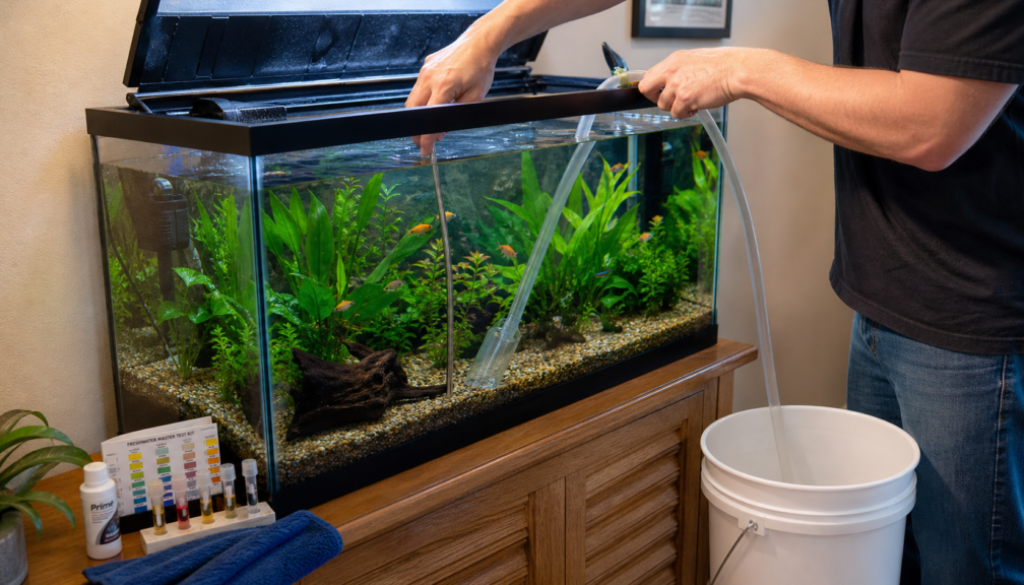
The substrate collects fish waste, uneaten food and plant debris. During your weekly aquarium maintenance routine, use a gravel vacuum or siphon to remove debris from the bottom of the tank.
You do not need to deeply clean every part of the substrate every week. In many aquariums, especially planted tanks, it is better to clean selected areas gently rather than disturb the entire bottom.
Focus on:
- open areas where food collects
- corners with low water movement
- areas under feeding spots
- visible waste on the substrate surface
If you have sand, hold the siphon slightly above the surface so it removes debris without sucking up too much sand. If you have gravel, you can push the vacuum slightly into the gravel to remove trapped waste.
This step keeps the tank cleaner and helps reduce nitrate buildup.
Step 6: Perform a Partial Water Change
A partial water change is one of the most important parts of freshwater aquarium maintenance.
For many aquariums, changing around 20–30% of the water once a week is a good general routine. However, the exact amount depends on tank size, number of fish, filtration, feeding habits and nitrate levels.
Avoid changing all the water at once unless there is an emergency. Large, sudden changes can stress fish and disturb the biological balance of the aquarium.
When adding new water, make sure it is:
- treated with a water conditioner if your tap water contains chlorine or chloramine
- similar in temperature to the aquarium water
- added gently to avoid disturbing fish and substrate
A weekly water change helps dilute nitrates and other dissolved waste products. It also refreshes the aquarium environment and supports long-term fish health.
Step 7: Check and Maintain the Filter
The aquarium filter is one of the most important pieces of equipment in your tank. It provides water movement and supports beneficial bacteria that help break down fish waste.
However, many beginners clean their filter too aggressively. This can damage the beneficial bacteria living inside the filter media.
Do not wash filter media under untreated tap water, especially if it contains chlorine. Instead, rinse sponge or biological media gently in a bucket of old aquarium water removed during the water change.
You do not need to replace filter media every week. In fact, replacing all filter media too often can harm the aquarium’s biological stability.
During weekly maintenance, check that:
- the filter is running properly
- water flow is not blocked
- intake areas are not clogged
- filter media is not packed with debris
- there are no strange noises or leaks
A filter should be cleaned only as much as needed to restore good water flow.
Step 8: Clean Decorations Carefully
Decorations, rocks and driftwood can collect algae and debris. If needed, gently brush them with an aquarium-safe sponge or soft brush.
Avoid removing and scrubbing everything every week. Decorations and hardscape surfaces can also contain beneficial bacteria. Overcleaning can make the tank less stable.
If a decoration is heavily covered in algae, it may be better to review the cause instead of only cleaning the result. Too much light, overfeeding and excess nutrients are common reasons for algae growth.
Step 9: Check Aquarium Equipment
Weekly maintenance is also a good time to make sure all aquarium equipment is working correctly.
Check the:
- heater
- thermometer
- filter
- lights
- air pump
- timer
- lid or cover
- power cables
Make sure the temperature is stable and suitable for your fish species. Also check that the light timer is working properly. Too many hours of light can encourage algae growth, especially in tanks without many live plants.
Catching equipment problems early can prevent serious issues later.
Step 10: Feed Carefully After Maintenance
After cleaning and a water change, fish may need a little time to settle. Feed lightly and observe how they respond.
Overfeeding is one of the most common causes of aquarium problems. Uneaten food breaks down quickly and can affect water quality.
A good rule is to feed only what your fish can eat within a short time. If food regularly falls to the bottom and remains uneaten, you are probably feeding too much.
Weekly maintenance works best when combined with responsible daily feeding.
Common Aquarium Maintenance Mistakes to Avoid
Even with good intentions, some maintenance habits can harm your aquarium.
Avoid these common mistakes:
Changing all the water at once
This can stress fish and disturb the biological balance.
Cleaning the filter with tap water
Chlorine can damage beneficial bacteria.
Replacing all filter media at the same time
This can cause instability in the nitrogen cycle.
Overcleaning the tank
A healthy aquarium is not sterile. Some natural biofilm and bacteria are necessary.
Ignoring water tests
Clear water does not always mean safe water.
Overfeeding after cleaning
Extra food quickly becomes waste.
The best aquarium maintenance routine is gentle, consistent and balanced.
Simple Weekly Aquarium Maintenance Checklist
Here is a practical weekly checklist you can follow:
- Observe fish behavior and appearance
- Check water temperature
- Test ammonia, nitrite, nitrate and pH
- Clean algae from the glass
- Remove dead plant leaves
- Vacuum visible debris from the substrate
- Change 20–30% of the water
- Rinse filter media only if needed
- Check heater, filter, lights and other equipment
- Feed carefully and observe the fish after maintenance
This routine can be adjusted depending on your tank, but it gives you a strong foundation for regular aquarium care.
How Long Does Weekly Aquarium Maintenance Take?
For most small and medium freshwater aquariums, weekly maintenance usually does not take very long once you have a routine. A simple tank may take 20–30 minutes, while a larger planted aquarium may take more time.
The key is consistency. It is much easier to maintain a tank every week than to fix a neglected aquarium after problems appear.
Small, regular actions are better than occasional deep cleaning.
Final Thoughts
A healthy aquarium does not require complicated maintenance, but it does require consistency. By observing your fish, testing the water, cleaning the substrate, maintaining the filter and performing regular partial water changes, you create a stable environment where fish, plants and beneficial bacteria can thrive.
Weekly aquarium maintenance is not just about making the tank look clean. It is about protecting the invisible balance that keeps your aquarium alive and healthy.
With a simple weekly routine, your freshwater tank can become easier to manage, more beautiful to watch and safer for every living creature inside it.
FAQ
How often should I clean my aquarium?
Most freshwater aquariums benefit from light weekly maintenance, including a partial water change, substrate cleaning and basic equipment checks.
Should I change all the water in my fish tank?
No, in most cases you should only change part of the water. A 20–30% weekly water change is often enough for many freshwater tanks.
Can I wash my aquarium filter with tap water?
It is better to rinse filter media in old aquarium water. Tap water may contain chlorine, which can harm beneficial bacteria.
Why is my aquarium dirty even after cleaning?
The cause may be overfeeding, too much light, poor filtration, overcrowding or unstable water parameters. Regular testing can help identify the problem.
Do I need to clean the aquarium if the water looks clear?
Yes. Clear water does not always mean healthy water. Waste products like ammonia, nitrite and nitrate may be present even when the aquarium looks clean.